
Restoration of the foreskin is still considered a novel and unorthodox idea to many people who have heard about it, however the majority of people haven’t even heard about it. Avon Cornish discussed this with his doctor during his interview with the BBC
In this interview, the doctor clearly discusses the “experimental” and untested nature of the modern tools that have been used to restore the foreskin.
Whilst this is true in a clinical setting, foreskin restoration is nothing novel and nothing new.
There has been a desire to restore the foreskin for thousands of years.
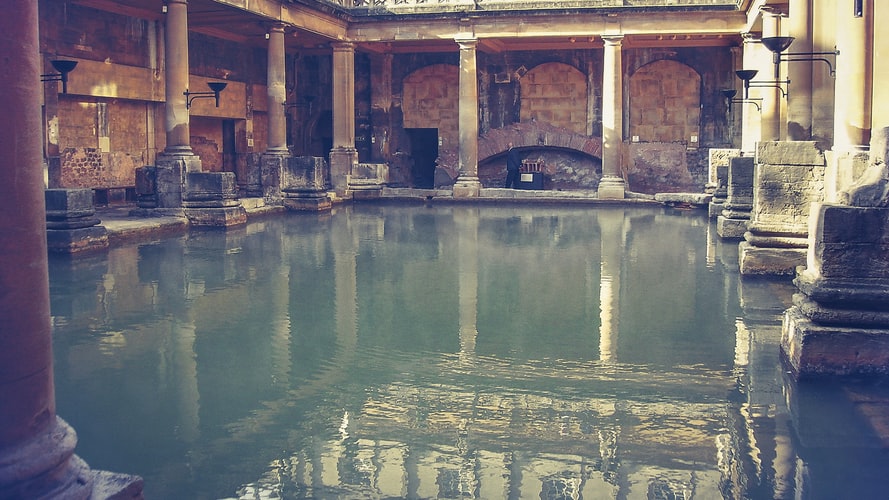
Some of these methods actually go back to the greco-roman period, Hellenistic games and public bathhouses.
The Romans and Greeks were affronted by an exposed glans, and this created a social pressure to find ways to cover it up in public settings involving nudity.
Whilst there is no longer pressure to have a covered glans, the exact opposite could be argued in a lot of cultures that support circumcision.
Despite this, some men still feel frustrated that their foreskin was removed, often without necessity, discussion, consideration or consent.
“Under the reign of Antiochus IV (168 BC) Hellenistic ideals, such as public nakedness at athletic games or in public baths, emerged in Judea and forced Jews to stretch their shortened foreskins with a special weight, the Pondus Judaeus, to cover the glans (I. Maccabees 1). Similar efforts are reported in the Talmud during the time of Hadrian (132 AD). Celsius (25 BC-50 AD) was the first to give a detailed description of two surgical techniques for uncircumcision in his ‘De MedicinaLibri Octo’. Subsequent works, for example by Galen (131-200 AD) and Paulus Aeginata in the seventh century, only contained a repetition of these methods without presenting any new aspects.”
D Schultheiss1, M C Truss, C G Stief, U Jonas – Uncircumcision: a historical review of preputial restoration
An interesting cultural practice is Auto-Retraction practiced in Japan.
Bath-house culture in Japan also has its expectations and standards. Whilst the Greeks and Romans encouraged a covered penis, the Japanese encourage an exposed penis.
Last week, 15 Square hosted an online meeting on foreskin restoration techniques with Ron Low, the engineer behind TLCTugger, and our own Doctor, Peter Ball.
It was great to see everyone involved and we hope that the information was useful. Hopefully, we will be repeating this event for any members who missed out on their chance to join.
For members of the 15Square website, you can find a guide to the process here. Visitors will need to sign up through the website, however, if you are a 15 Square member then contact us for a coupon code for free annual access.
This video is graphic by nature, but it includes methods that can be used at home without a specialised device.
For those who are interested in the devices engineered by Ron at TLCTugger, you can find out more here. A big thanks to Ron, who has so far exceeded 50,000 sales through his website and kindly gave up his time to talk to our interested members.
Some of you may be aware of 15 Square’s admiration for the Statue of David by Michelangelo. The statue depicts David, the King of Israel, an important character in Jewish and Christian Mythology.
Despite coming from a traditionally circumcising culture, David is depicted as intact.
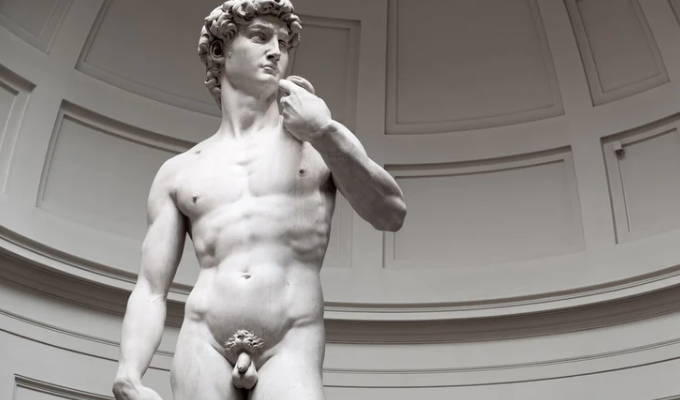
We can’t talk about the classics without mentioning this amazing piece of art.
To us, he is a symbol of the natural state of man and a reminder that anyone can be left intact, and with enough dedication and the proper technique, many circumcised men can restore their foreskin.
For further advice on restoration techniques from the Reddit community, check out the forum.
Be the first to comment